September 8, 2026
AI Is Changing the Future of Work – Is Pakistan’s Youth Ready? A quiet but massive shift is underway...

Life Skills Education : What It Is and Why Pakistani Youth Need It
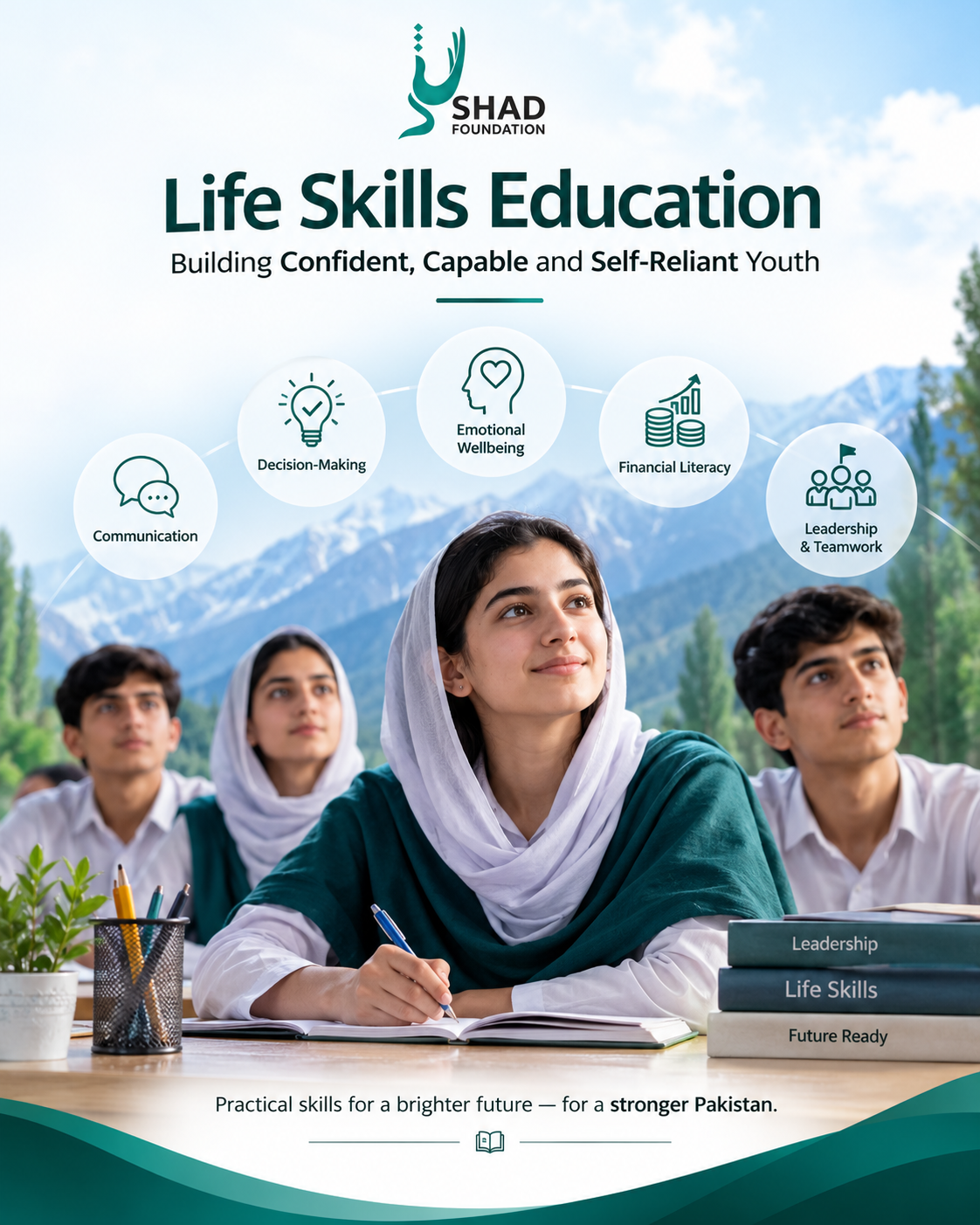
Life skills education teaches practical, non-academic abilities – communication, decision-making, financial literacy, emotional regulation, and teamwork , that young people need to manage daily life and work. In Pakistan, where formal schooling often emphasizes rote learning, life skills training helps close the gap between passing exams and being genuinely ready for a job, a household, or a leadership role.
Across Pakistan’s youth development centers, a quiet but important shift is happening: organizations are recognizing that a diploma or degree alone doesn’t prepare a young person for the real challenges of adulthood. Life skills education is stepping in to fill that gap and for good reason.
Life skills education refers to structured training in the practical abilities people use every day but rarely learn in a traditional classroom. This typically includes:
Pakistan’s education system remains heavily weighted toward exam-based, memorization-driven learning. That approach can produce strong test scores without building the confidence, communication ability, or emotional resilience young people need once they step into a workplace, start a business, or take on family responsibilities. Employers across sectors consistently report that technical qualifications alone aren’t enough, they’re also looking for candidates who can communicate clearly, manage their time, work in teams, and handle setbacks without losing motivation.
For young people coming from under-resourced or rural backgrounds in particular, life skills training can be transformative. It builds the self-confidence and practical know-how needed to navigate unfamiliar environments, a new city, a competitive job market, or higher education – without the safety net that more privileged peers may take for granted.
Ask any recent graduate in Pakistan about their first months in a job or in a new city, and you’ll likely hear the same theme: the classroom didn’t prepare them for this. Managing a monthly budget, navigating a difficult conversation with a supervisor, or simply organizing a daily schedule without a rigid class timetable can feel unexpectedly difficult without prior practice. Life skills education directly addresses this readiness gap, not by replacing academics, but by complementing them.
SHAD Foundation integrates life skills training into daily life at its Youth Development Centers (YDCs) in Islamabad, Rawalpindi, and Chitral, not as a one-off workshop, but as an ongoing part of the boarding experience. Boarders take part in structured sessions on personal development, confidence-building, and emotional wellbeing, alongside mentorship and career counseling delivered by outside professionals and guest speakers. The goal is straightforward: help every young person leave the YDC not just with an education, but with the practical tools to build an independent, self-directed life.
If you’re a student looking to build these skills, or a professional interested in mentoring young people in Islamabad, Rawalpindi, or Chitral, SHAD Foundation’s Youth Development Centers offer a practical starting point. ADMISSIONS
A life skill is any practical ability that helps a person manage daily life and work effectively, communication, decision-making, financial literacy, emotional regulation, and teamwork are the most commonly taught examples.
It’s woven into daily boarding life through structured sessions, mentorship, and guest-led workshops on topics like confidence-building, career direction, and emotional wellbeing , rather than delivered as a single standalone class.
The fee/charges for YDC youth development center varies for every branch rawalpindi, islamabad and chitral. also the negitiaable fee is variable for every participent on the basis of her current income conditions and the family status/background.
Female students from gilgit baltistan and chitral, and the young female professioanls who are looking for accumodation is twin cities rawalpindi, islamabad and chitral.