October 30, 2026
SHAD Foundation Launches Youth Character & Leadership Academy in Lower Chitral Empowering Young People Through Martial Arts SHAD Foundation...


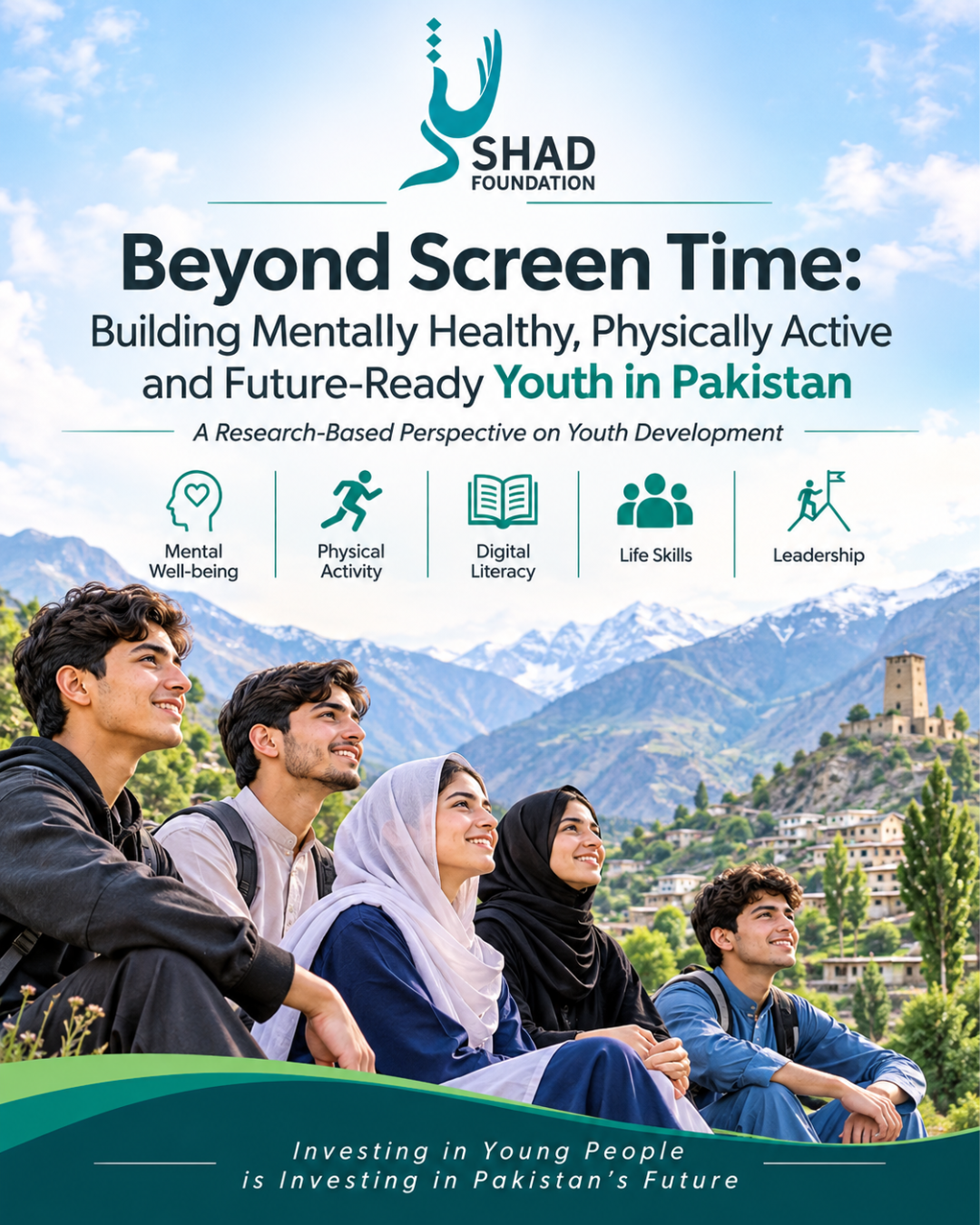
A Research-Based Perspective on Mental Well-being, Digital Responsibility, Physical Activity and Youth Empowerment
Young people are growing up in a world shaped by rapid technological change, evolving social expectations, educational challenges and increasing demands for professional skills. While digital technologies have created unprecedented opportunities for learning, communication and innovation, they have also introduced new challenges involving mental well-being, social relationships, physical inactivity and responsible technology use.
For Pakistan, these developments carry particular importance. The country has one of the world’s largest youth populations, making investment in young people’s education, health, skills and personal development essential for long-term social and economic progress.
However, preparing young people for the future requires more than academic qualifications or access to digital devices. It requires an integrated approach that develops physical health, emotional resilience, critical thinking, communication, self-discipline, leadership and the ability to participate responsibly in society.
Recent research from the United Nations, World Health Organization (WHO), UNESCO and international scientific journals highlights the importance of addressing these interconnected dimensions of youth development.
This article examines how families, educational institutions, community organizations and policymakers can work together to support mentally healthy, physically active and future-ready young people in Pakistan.
Youth development is a multidimensional process involving physical, psychological, educational, social and economic development. It is not simply about helping young people acquire qualifications or enter employment. It is about creating the conditions in which they can develop their abilities, make informed decisions, establish healthy relationships and contribute positively to their communities.
Pakistan’s demographic profile makes this issue particularly significant.
According to a June 2026 United Nations update, approximately 67% of Pakistan’s population is under the age of 30. This represents an enormous opportunity for national development, provided that young people have access to quality education, meaningful skills development, healthcare and opportunities for participation.
At the same time, the country’s development challenges remain substantial. Pakistan’s Household Integrated Economic Survey (HIES) 2024–25, released by the Pakistan Bureau of Statistics in January 2026, reported that 28% of children aged 5–16 were out of school. The same survey reported that household internet access had increased to 70%, while the proportion of individuals using the internet reached 57%.
These figures illustrate two important realities: Pakistan has significant educational access challenges, while digital connectivity is expanding rapidly.
The two developments should be considered together. Access to technology does not automatically translate into meaningful learning, digital competence or improved life opportunities. Similarly, school attendance alone does not guarantee that young people develop the emotional, interpersonal and practical skills needed to navigate adulthood.
A comprehensive youth-development strategy must therefore address education, health, technology, social inclusion and personal development simultaneously.
Mental health is an essential component of healthy development. It influences how young people understand themselves, manage emotions, respond to challenges, maintain relationships and participate in education and community life.
According to the World Health Organization’s September 2025 fact sheet on adolescent mental health, approximately one in seven individuals aged 10–19 experiences a mental health condition globally.
Depression, anxiety and behavioural disorders are among the important contributors to illness and disability in this age group.
Adolescence is a period of significant biological, emotional and social development. Academic expectations, family circumstances, economic uncertainty, bullying, social exclusion, peer pressure and concerns about the future can all influence psychological well-being.
Mental health should not be understood only in terms of diagnosed disorders. Everyday emotional well-being, confidence, supportive relationships, coping abilities and a sense of belonging are also important dimensions of healthy development.
The WHO identifies several protective factors, including:
These findings highlight the importance of creating environments in which young people feel respected, included and comfortable seeking assistance.
Parents, teachers, mentors and community leaders can contribute by encouraging open communication, recognizing signs of emotional distress, avoiding stigmatizing language and helping young people access appropriate professional support.
Schools and youth organizations can also introduce age-appropriate activities that develop emotional awareness, cooperation, confidence and problem-solving abilities.
Importantly, community-based youth programmes should complement rather than replace professional mental health services. Young people experiencing persistent distress or significant psychological difficulties should be encouraged to seek qualified assistance.
Digital technology has transformed how young people learn, communicate, access information and participate in society. Smartphones, social networking platforms, online learning environments and artificial intelligence tools can provide valuable educational and professional opportunities.
However, the relationship between digital media and young people’s development is complex.
An important contribution to this discussion is a 2026 umbrella review published in eClinicalMedicine, titled “Associations of digital media use with health, behavioural and developmental outcomes in children and adolescents.”
The researchers synthesized evidence from 121 systematic reviews, including 52 with meta-analyses. These reviews covered 2,790 unique primary studies and more than nine million participants.
The findings indicated that digital media use was associated with a range of physical, psychological, behavioural and developmental outcomes. Among adolescents, problematic digital media use and certain patterns of social media engagement were associated with poorer mental health, sleep difficulties, reduced physical activity and lower quality of life.
However, the researchers also emphasized that digital media outcomes vary according to age, content, context and patterns of use. The predominantly observational evidence does not establish that digital media exposure directly causes every reported outcome.
This distinction is important. Digital technology itself is not inherently harmful. Its effects depend significantly on how, why, when and in what circumstances it is used.
Instead of focusing exclusively on the number of hours spent using devices, families and educational institutions should promote healthier digital habits.
Practical measures include:
The objective should not be to isolate young people from technology. It should be to equip them with the knowledge and judgment needed to use digital resources constructively.
Physical activity is another fundamental element of youth development. Its benefits extend beyond physical fitness to include cognitive development, social interaction and psychological well-being.
The World Health Organization’s physical activity guidelines recommend that children and adolescents aged 5–17 undertake an average of at least 60 minutes of moderate-to-vigorous physical activity per day across the week.
The recommended activities can include walking, running, cycling, sports, recreational play and structured exercise. The WHO also recommends incorporating vigorous aerobic activities and muscle- and bone-strengthening activities at least three days per week.
Despite these recommendations, physical inactivity remains a significant global concern. The WHO reports that approximately 81% of adolescents aged 11–17 do not meet recommended physical activity levels.
Research increasingly recognizes the relationship between physical activity and psychological well-being.
A systematic review published in Frontiers in Public Health in March 2026 examined the relationship between physical activity settings and adolescent mental health.
The review found predominantly favourable associations across several areas, including well-being, emotional experience, self-concept, competence and social connectedness. However, findings relating to anxiety, depression and resilience were more mixed, and the certainty of evidence ranged from very low to moderate.
This suggests that the quality of the activity environment matters alongside participation itself.
Well-designed sports and physical development programmes can provide opportunities for young people to:
Physical activities should be enjoyable, inclusive, age-appropriate and adapted to individual abilities. Participation should not be restricted to young people who are already physically fit or athletically talented.
Academic achievement is important, but it is only one part of preparing young people for adulthood.
Life skills help individuals manage everyday challenges, communicate effectively, make informed decisions and maintain constructive relationships.
The World Health Organization and other international development organizations recognize skills such as communication, problem-solving, critical thinking, decision-making, empathy and emotional regulation as important components of adolescent development.
Character development is closely connected to these capabilities.
Values such as honesty, responsibility, respect, perseverance, fairness and self-discipline influence how young people interact with others and respond to difficult situations.
Leadership development should similarly extend beyond holding formal positions. A young person demonstrates leadership when they take responsibility, contribute to a group, listen to different perspectives, support others and work toward shared objectives.
Youth organizations, educational institutions and community groups can strengthen leadership through:
These activities provide opportunities to practice skills in real-world settings rather than learning them only through theoretical instruction.
A supportive environment is essential. Young people should be encouraged to express ideas, take appropriate responsibility, learn from mistakes and participate in decision-making.
Artificial intelligence, automation and digital transformation are changing education, employment and economic participation.
Young people increasingly need more than basic computer literacy. They need the ability to evaluate information, understand digital systems, protect personal data, recognize misinformation and use emerging technologies responsibly.
UNESCO Islamabad’s March 2026 article, “Breaking Digital Barriers: How Digital Learning Is Empowering Youth and Advancing Peace in Pakistan,” highlights the importance of trusted digital learning platforms, media and information literacy, critical thinking and responsible technology use.
The article also identifies unequal access to digital infrastructure and digital skills as continuing challenges, particularly in rural and underserved communities.
Pakistan’s National AI Policy 2025 provides an additional policy context for expanding responsible artificial intelligence adoption and digital capabilities.
A comprehensive digital literacy programme should introduce young people to:
Information literacy: Evaluating sources, verifying information and distinguishing evidence from misinformation.
Digital communication: Communicating respectfully and professionally through digital platforms.
AI literacy: Understanding what artificial intelligence can and cannot do, identifying limitations and using AI tools responsibly.
Privacy and cybersecurity: Understanding password security, personal data protection, online safety and digital identity.
Creative and technical skills: Developing practical abilities in digital content creation, coding, design, research and problem-solving.
Ethical technology use: Understanding intellectual property, academic integrity, bias, responsible AI use and the social implications of technology.
Access to these opportunities should not depend exclusively on geographical location or household income. Community learning spaces, accessible training programmes, educational partnerships and locally relevant digital resources can help reduce barriers.
Youth development cannot be achieved by a single institution. It requires collaboration between families, educational institutions, government departments, healthcare professionals and community organizations.
Each stakeholder has a different but complementary responsibility.
Families provide an important foundation for emotional security, values, communication and healthy routines. Parents can encourage learning, physical activity, responsible technology use and open conversations about personal challenges.
Schools can integrate physical education, social and emotional learning, digital literacy, career guidance and inclusive extracurricular activities into educational experiences.
Teachers should also be supported in identifying potential signs of emotional distress and referring students to appropriate professional services.
Community organizations can provide accessible opportunities for young people who may have limited access to structured educational, recreational or leadership programmes.
These organizations can organize sports activities, mentorship, workshops, volunteer initiatives, cultural programmes and community-based learning opportunities.
Public institutions have an important role in strengthening education systems, adolescent-responsive healthcare, safe recreational spaces, digital infrastructure and inclusive youth policies.
Particular attention should be given to rural communities, girls, young people with disabilities and economically disadvantaged groups.
An effective youth-development strategy must recognize that young people do not all face identical circumstances. Programmes should be designed around accessibility, inclusion, safety and individual needs.
Research findings become meaningful when they inform practical action.
The following recommendations can help families, educational institutions and community organizations develop more effective youth programmes.
1. Introduce structured physical activities
Provide opportunities for regular sports, martial arts, recreational exercise, outdoor activities and physical education. Activities should be accessible and adapted to different ages and abilities.
2. Promote emotional awareness
Include age-appropriate sessions on emotional regulation, communication, confidence, stress management and seeking help.
3. Strengthen digital literacy
Teach young people how to verify information, protect personal data, identify online risks and use technology for education and creativity.
4. Develop leadership opportunities
Encourage young people to participate in community projects, volunteer activities, collaborative learning and decision-making.
5. Improve access to mentorship
Connect young people with responsible mentors, educators and professionals who can provide guidance about education, personal development and career opportunities.
6. Encourage family and community participation
Involve parents, local institutions and community representatives in designing and evaluating youth programmes.
7. Make programmes inclusive
Ensure that girls, young people with disabilities, rural communities and economically disadvantaged groups can participate meaningfully.
8. Measure outcomes rather than attendance alone
Youth programmes should assess more than the number of participants. Appropriate indicators can include participation, skill development, confidence, physical activity, digital literacy, leadership engagement and participant feedback.
Where mental health outcomes are assessed, organizations should use appropriate validated instruments and qualified professionals, with suitable consent and privacy safeguards.
Building healthier, more confident and future-ready young people requires sustained community engagement and practical opportunities for personal development.
SHAD Foundation recognizes the importance of empowering young people through educational, physical, social and leadership-oriented initiatives.
One example is the Foundation’s Youth Character & Leadership Academy in Lower Chitral, Khyber Pakhtunkhwa, powered by martial arts.
As described in its published programme announcement, the initiative combines martial arts training, particularly Taekwondo, with character development, leadership skills and personal growth.
The programme aims to provide young participants with opportunities to develop physical fitness, discipline, confidence, responsibility and respect.
Such community-based initiatives illustrate how structured extracurricular activities can complement formal education by giving young people opportunities to practice personal and interpersonal skills.
The broader vision of youth empowerment should also include digital literacy, educational support, mentorship, community participation and inclusive development opportunities.
For initiatives to create lasting value, programmes should be continuously evaluated, adapted to local needs and supported through collaboration with families, educators, professionals and community partners.
SHAD Foundation believes that empowering young people is not simply an investment in individual achievement. It is an investment in stronger families, more resilient communities and a more capable society.
Learn more about SHAD Foundation’s youth-development initiative:
Empowering Young People Through Martial Arts – SHAD Foundation
Youth development is a comprehensive process that supports young people’s physical, emotional, social, educational and professional growth. It includes developing life skills, confidence, leadership, responsible decision-making and the ability to contribute positively to society.
Mental health influences how young people learn, communicate, manage emotions, maintain relationships and respond to challenges. Supporting mental well-being during adolescence can contribute to healthier development and better opportunities throughout adulthood.
Research indicates that certain patterns of social media use, particularly problematic or excessive engagement, are associated with sleep difficulties, psychological distress and lower well-being. However, outcomes vary depending on the individual, content, context and manner of use. Digital platforms can also provide educational and social benefits.
The WHO recommends an average of at least 60 minutes of moderate-to-vigorous physical activity per day for children and adolescents aged 5–17 across the week. Activities can include walking, cycling, sports, running and recreational play.
Important life skills include communication, critical thinking, problem-solving, decision-making, empathy, emotional regulation, teamwork, self-discipline and responsible leadership.
Community organizations can provide accessible opportunities for sports, mentorship, digital literacy, volunteerism, leadership development, educational support and personal growth. They can also connect young people with families, professionals and local institutions.
Young people can prepare by developing digital literacy, critical thinking, communication, problem-solving, technical skills and responsible AI use. They should learn to evaluate AI-generated information rather than relying on it without verification.
The future of Pakistan will depend significantly on how effectively the country supports and develops its younger generations.
Education, technology and employment opportunities are essential, but they cannot independently address every dimension of youth development. Young people also need supportive relationships, physical activity, emotional well-being, practical life skills, responsible digital habits and opportunities to participate meaningfully in their communities.
International research reinforces the importance of treating these areas as interconnected priorities rather than isolated interventions.
Families, schools, government institutions and community organizations must work together to create environments in which young people can learn, grow, contribute and reach their potential.
For organizations such as SHAD Foundation, this represents an important opportunity to support practical, inclusive and community-driven approaches to youth empowerment.
A future-ready generation is not defined by academic qualifications or technological access alone. It is built through knowledge, health, character, confidence, responsibility and the opportunity to make a meaningful contribution to society.