November 4, 2026
Beyond Screen Time: Building Mentally Healthy, Physically Active and Future-Ready Youth in Pakistan A Research-Based Perspective on Mental Well-being,...

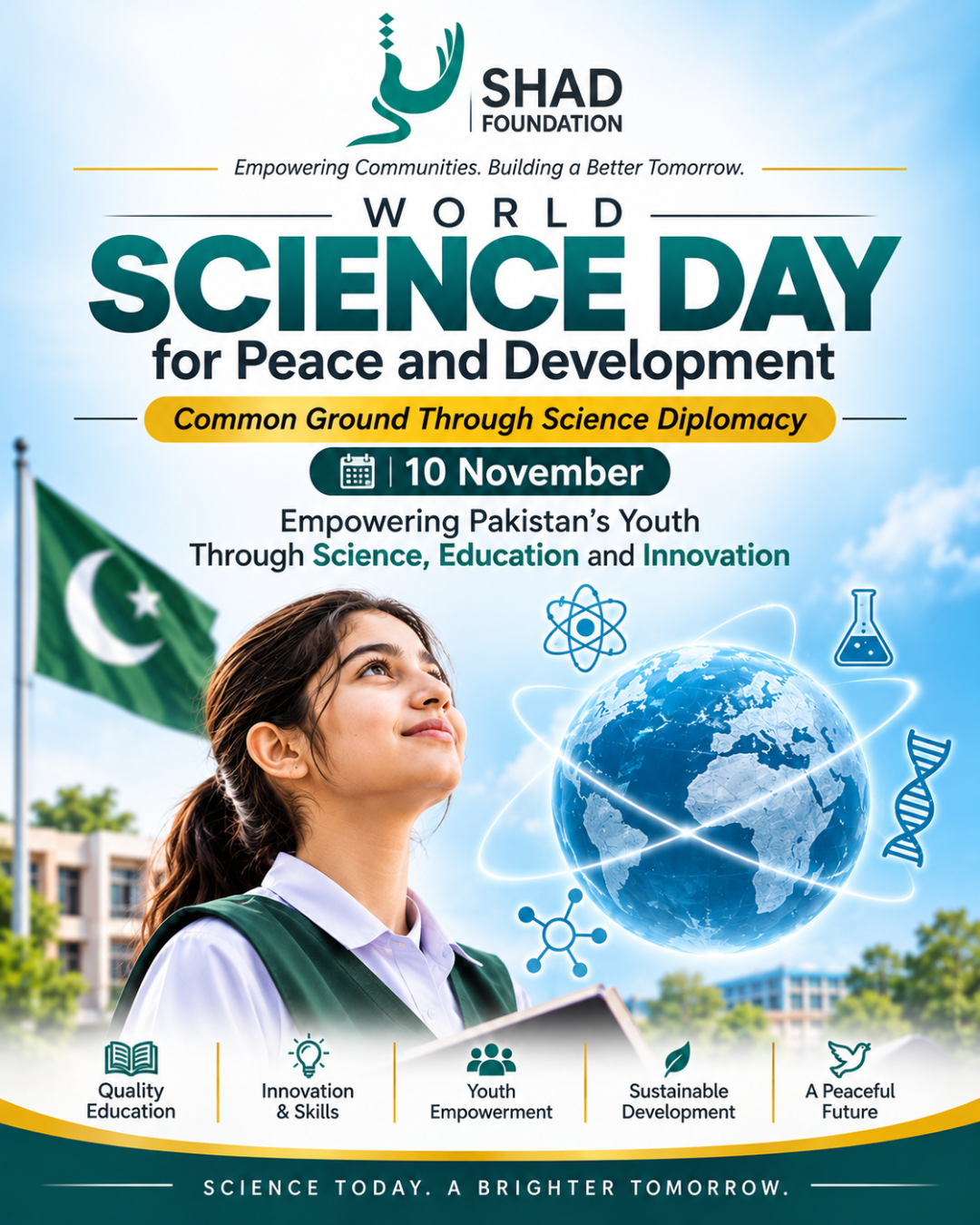
World Science Day for Peace and Development 2026: Empowering Pakistan’s Youth Through Science, Education and Innovation
Every year on 10 November, the world observes World Science Day for Peace and Development, an international observance established to highlight the importance of science in society and its contribution to peaceful, inclusive and sustainable development.
In 2026, UNESCO has selected the theme “Common Ground Through Science Diplomacy,” emphasizing how scientific knowledge, international cooperation and evidence-based dialogue can help build understanding, address shared challenges and create opportunities for a better future.
For Pakistan, this occasion carries particular significance. With a large young population, growing digital opportunities and considerable educational inequalities, investing in scientific awareness, critical thinking, innovation and accessible learning is essential for preparing the next generation.
However, scientific progress does not begin only in laboratories or universities. It begins when a child asks a question, a student learns to solve a problem, a teacher encourages curiosity, or a young person discovers how technology can improve the lives of others.
At SHAD Foundation Pakistan, youth empowerment, accessible education, digital literacy, leadership development and community engagement are interconnected priorities. World Science Day offers an opportunity to recognize how these areas can contribute to a more informed, capable and resilient society.
World Science Day for Peace and Development is observed annually on 10 November under the leadership of the United Nations Educational, Scientific and Cultural Organization (UNESCO).
The observance highlights the relationship between science, society and sustainable development. It encourages public engagement with scientific knowledge, promotes international scientific cooperation and recognizes the responsibility of science in addressing global challenges.
The day also reinforces an important principle: scientific advancement should benefit society as a whole rather than remain accessible only to a privileged segment of the population.
Its objectives include:
The 2026 theme: Common Ground Through Science Diplomacy
Science diplomacy refers to the use of scientific cooperation, research and shared knowledge to strengthen relationships, encourage dialogue and address challenges that cross national boundaries.
Climate change, public health, food security, water scarcity, technological development and environmental protection are examples of issues that require cooperation beyond geographical and political boundaries.
For young people, the message is straightforward: knowledge, collaboration and critical thinking can help build bridges between communities and contribute to peaceful development.
Pakistan’s development depends significantly on how effectively it prepares its younger generations to participate in an increasingly knowledge-driven world.
Scientific literacy is no longer limited to students pursuing careers in medicine, engineering or research. It is relevant to entrepreneurship, agriculture, healthcare, environmental management, education, public administration and almost every modern profession.
A scientifically informed individual is better equipped to evaluate information, distinguish evidence from misinformation, understand technological developments and make informed decisions.
One of the greatest benefits of science education is its ability to develop critical thinking.
Science encourages individuals to ask questions, examine evidence, identify patterns, test assumptions and develop logical conclusions.
These skills are valuable far beyond academic subjects. They help young people make responsible decisions, understand social challenges and approach everyday problems with confidence.
Pakistan needs young people who do not simply memorize information but understand how to apply knowledge to real-world situations.
Artificial intelligence, automation, data science, cybersecurity and digital communication are transforming the global employment landscape.
Young people need opportunities to develop digital literacy and understand emerging technologies.
Digital education should not be restricted to learning how to operate computers or use applications. It should also introduce responsible technology use, information evaluation, computational thinking, digital problem-solving and innovation.
The Pakistan Science Foundation’s STEM initiatives recognize the importance of integrating theoretical knowledge with practical experience to develop problem-solving, collaboration, creativity and innovation.
Access to quality education and practical learning opportunities remains uneven across Pakistan.
Students living in remote communities may encounter barriers such as limited educational facilities, insufficient learning resources, restricted internet connectivity and fewer opportunities for professional guidance.
These challenges can particularly affect girls and students from economically disadvantaged households.
UNESCO’s 2024 initiative to provide science laboratory equipment to girls’ schools in districts including Swat, Mohmand and Kohistan demonstrates the importance of improving access to practical science education in underserved communities.
Educational equality means ensuring that a student’s geographical location, gender or financial circumstances do not determine the limits of their potential.
Science and innovation are important drivers of economic development.
When young people learn to identify problems and develop practical solutions, they begin to understand entrepreneurship as more than establishing a business. It is also about creating value for society.
From developing agricultural solutions to creating digital services, improving healthcare access and addressing environmental challenges, innovative thinking can generate opportunities for individuals and communities.
Pakistan’s future requires young people who can combine technical knowledge with creativity, leadership and practical decision-making.
Science education becomes more effective when it is supported by a broader environment that develops the individual as a whole.
A young person may have access to educational resources but still need mentorship, confidence, communication skills, emotional wellbeing and opportunities to apply knowledge.
This is where youth development organizations can make an important contribution.
SHAD Foundation’s approach to youth development connects education with life skills, leadership, digital literacy, career guidance, personal development and community participation.
These areas complement scientific learning and help young people translate knowledge into meaningful action.
Access to education is the foundation of scientific awareness and informed citizenship.
SHAD Foundation works toward creating equitable access to quality education and lifelong learning opportunities, particularly for young people and underserved communities.
Its educational focus includes life skills and soft skills training, skill development, vocational learning, inclusive education and personal development.
Connecting these opportunities with scientific awareness can encourage students to explore subjects beyond traditional classroom learning.
Young people should be encouraged to understand how science relates to their surroundings, their future careers and the development of their communities.
Digital literacy is increasingly important for participation in modern education, employment and economic activity.
SHAD Foundation identifies digital literacy and innovation as important components of its youth development work.
Digital learning opportunities can help young people become more confident in using technology, evaluating information and exploring emerging professional fields.
Practical learning in areas such as computer literacy, digital communication, responsible artificial intelligence use and problem-solving can complement formal education.
The objective should be to move beyond passive technology consumption and encourage young people to become informed, responsible and creative digital participants.
Scientific knowledge alone cannot address every social challenge. It must be accompanied by leadership, communication, teamwork and the ability to work collaboratively.
SHAD Foundation’s youth development priorities include leadership and capacity building, volunteerism and civic engagement, youth camps and conferences.
These activities can help young people develop the confidence to express ideas, organize initiatives, collaborate with others and contribute to their communities.
When scientific awareness is combined with responsible leadership, young people become better equipped to turn knowledge into community-level solutions.
Many students struggle to connect their academic interests with realistic professional opportunities.
Career counselling and mentorship can help young people understand different educational pathways, identify their strengths and make informed decisions about future careers.
Scientific and technological fields offer opportunities in areas such as:
SHAD Foundation’s emphasis on career counselling and mentorship can support young people in exploring these possibilities and preparing for changing employment requirements.
Innovation, education and personal development require an environment in which young people feel supported and confident.
Academic pressure, financial challenges, uncertainty about the future and limited access to guidance can affect students’ motivation and learning experiences.
Mental health awareness and emotional wellbeing are therefore important parts of holistic youth development.
SHAD Foundation recognizes mental health and emotional wellbeing as part of its educational and youth development priorities.
Supporting young people emotionally can help them develop resilience, confidence and the ability to navigate academic and professional challenges.
Scientific progress should not benefit only major cities or privileged communities.
Remote and underserved areas also need opportunities to participate in education, innovation and social development.
SHAD Foundation’s community development approach focuses on social welfare, health awareness, women’s empowerment, environmental sustainability and community-led initiatives.
These priorities connect naturally with the broader objectives of science for sustainable development.
For example, communities can benefit from scientific awareness about clean water, sanitation, nutrition, environmental protection, public health and climate resilience.
When local communities participate in identifying and addressing their own challenges, development initiatives become more relevant and sustainable.
A country’s scientific potential cannot be fully realized when significant sections of its population face barriers to education and innovation.
Girls, young women and students from remote communities deserve equal opportunities to explore science, technology, engineering and mathematics.
UNESCO’s work in Pakistan has highlighted the importance of providing practical science-learning resources to girls’ schools in underserved districts.
This is an important reminder that educational access requires more than enrollment. Students also need trained teachers, appropriate learning materials, practical experiences, mentorship and supportive educational environments.
Rural development should therefore include opportunities for digital literacy, scientific awareness, vocational training and career guidance.
Organizations working with underserved communities can help create pathways through which young people discover their abilities and participate more actively in society.
At SHAD Foundation, inclusive education, women’s empowerment and youth development form important parts of its broader commitment to community progress.
Science can help societies address challenges, but its benefits depend on how knowledge is developed, shared and applied.
Scientific cooperation promotes understanding between communities and encourages solutions based on evidence rather than assumptions.
The relationship between science and peace can be understood through several important areas:
Environmental sustainability: Scientific knowledge helps communities understand climate change, protect natural resources, improve waste management and promote responsible environmental practices.
Public health: Research and scientific awareness support disease prevention, nutrition, sanitation and informed healthcare decisions.
Education: Scientific literacy strengthens learning, encourages curiosity and prepares future generations for emerging challenges.
Economic development: Innovation, technology and research create opportunities for productivity, entrepreneurship and employment.
Social inclusion: Equitable access to scientific learning helps reduce educational barriers and gives underserved communities greater opportunities to participate in development.
These priorities are closely connected to the United Nations Sustainable Development Goals, particularly:
Scientific development does not require every young person to become a scientist.
Every individual can contribute by developing curiosity, improving their knowledge and using available resources responsibly.
Young people can take practical steps:
Small learning experiences can develop into meaningful contributions when young people are provided with encouragement, guidance and opportunities.
World Science Day for Peace and Development is an opportunity to recognize that scientific progress and human development are interconnected.
At SHAD Foundation Pakistan, the commitment to youth empowerment extends beyond academic education. Its work connects learning with leadership, digital literacy, career development, emotional wellbeing, social responsibility and community participation.
Through its youth development initiatives, educational programs and community-focused activities, SHAD Foundation works toward creating opportunities for young people to develop the skills and confidence needed to contribute positively to society.
Its Youth Development Centers in Islamabad, Rawalpindi and Chitral represent an important part of this commitment, providing an environment focused on personal development, learning and opportunity.
The foundation’s broader priorities include:
These areas provide a meaningful foundation for connecting scientific awareness with the wider development of individuals and communities.
The goal is not simply to prepare young people for examinations or employment. It is to help them become informed citizens, responsible leaders, capable professionals and active contributors to sustainable development.
Learn more about SHAD Foundation’s work:
Website: https://shadfoundation.org.pk/
Projects and Programs: https://shadfoundation.org.pk/projects-and-programs/
On World Science Day for Peace and Development 2026, the message for Pakistan is clear: investing in young people means investing in the country’s scientific, educational and social future.
Governments, educational institutions, civil society organizations, parents, teachers and community leaders all have a role in creating opportunities for scientific learning and innovation.
Schools must encourage curiosity and practical learning. Communities must support inclusive education. Organizations must create pathways for skills development and mentorship. Young people must be encouraged to question, explore, collaborate and contribute.
Most importantly, scientific opportunities should not be determined by a person’s financial circumstances, gender or geographical location.
A student in a remote village deserves the same opportunity to discover their potential as a student in a major city.
A girl with an interest in technology deserves encouragement, resources and mentorship.
A young person with an innovative idea deserves an environment where that idea can develop.
Science creates knowledge, education develops understanding, and empowered young people turn both into progress.
This World Science Day, let us work toward a future where every young mind has the opportunity to learn, innovate and contribute to a more peaceful, inclusive and sustainable Pakistan.
SHAD Foundation Pakistan – Empowering Youth, Strengthening Communities.
World Science Day for Peace and Development is celebrated every year on 10 November. It is a UNESCO-led international observance that highlights the importance of science in society and its contribution to peace and sustainable development.
The 2026 theme is “Common Ground Through Science Diplomacy.” It highlights how scientific cooperation, shared knowledge and dialogue can help countries and communities address common challenges.
It highlights the importance of scientific literacy, quality education, research, technological innovation and equal learning opportunities. These areas are essential for preparing Pakistan’s youth for future employment, entrepreneurship and sustainable development.
Science education develops critical thinking, creativity, problem-solving and analytical skills. It also helps young people understand technology, explore professional opportunities and develop solutions to real-world problems.
STEM stands for Science, Technology, Engineering and Mathematics. STEM education combines these disciplines to develop practical knowledge, innovation, analytical thinking and problem-solving abilities.
NGOs can support scientific awareness through educational programs, digital literacy, mentorship, career counselling, community engagement, inclusive learning initiatives and partnerships with schools and educational institutions.
SHAD Foundation Pakistan focuses on youth development, education and community development. Its priorities include leadership and capacity building, digital literacy, vocational skills, career counselling, emotional wellbeing, volunteerism and inclusive educational opportunities.
Young people can contribute through education, scientific awareness, responsible technology use, environmental initiatives, community service, entrepreneurship and participation in programs that promote social and economic development.
Visit https://shadfoundation.org.pk/ to learn about its mission, educational initiatives, youth development activities, community programs and opportunities to participate.
About SHAD Foundation Pakistan
SHAD Foundation is an Islamabad-based not-for-profit organization committed to strengthening and empowering disadvantaged communities through education, youth development, skills training and social and economic opportunities. Its work focuses on creating an enabling environment where individuals and communities can develop their potential and contribute to a more inclusive society.
Together, we can empower young minds, strengthen communities and build a better future.